If you’ve ever felt overwhelmed by complicated budgeting systems with dozens of categories to track, the 50/30/20 rule might be exactly what you need. This straightforward budgeting method has helped millions of people take control of their finances without the stress of micromanaging every dollar.
Created by US Senator Elizabeth Warren in her book “All Your Worth: The Ultimate Lifetime Money Plan,” this rule offers a balanced approach to managing your money that’s both simple to understand and flexible enough to adapt to your life.
What Is the 50/30/20 Rule?
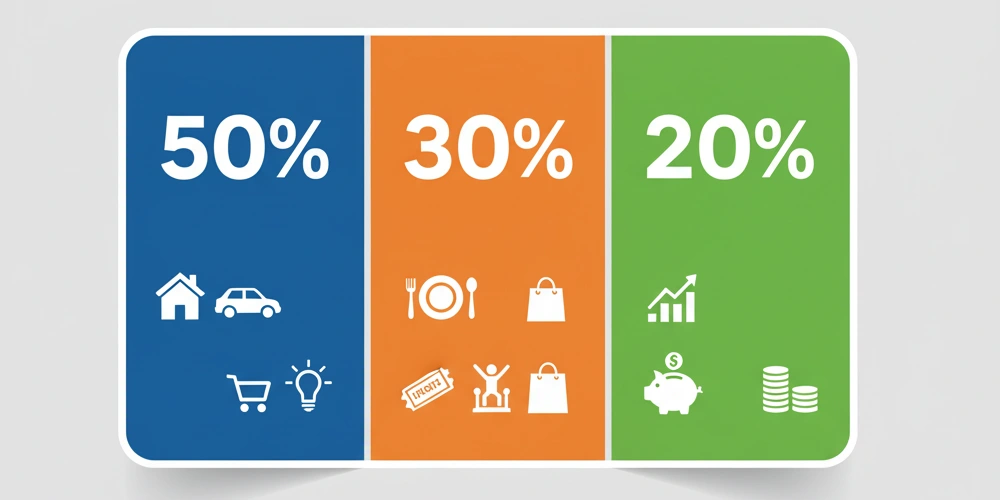
The 50/30/20 rule divides your after-tax income into three main categories:
- 50% for Needs – Essential expenses you can’t avoid
- 30% for Wants – Things you enjoy but could live without
- 20% for Savings and Debt Repayment – Your financial future
That’s it. No complex spreadsheets, no tracking every coffee purchase, just three clear categories that give you both structure and freedom.
Breaking Down the Categories
50% Needs: Your Essential Expenses
Needs are the expenses that you absolutely must pay to survive and maintain your basic standard of living. These are non-negotiable costs that keep a roof over your head and food on the table.
Needs typically include:
- Rent or mortgage payments
- Utility bills (electricity, water, gas, internet)
- Groceries and essential household items
- Transportation costs (car payments, insurance, petrol, or public transport)
- Insurance (health, home, contents, life)
- Minimum debt payments
- Essential clothing
- Basic mobile phone plan
What doesn’t count as a need: The key word here is “essential.” Your Netflix subscription isn’t a need, even if it feels like one. Dining out isn’t a need when you can cook at home. The premium gym membership isn’t a need when you can exercise for free outdoors.
If you’re finding that your needs exceed 50% of your income, you have two options: increase your income or reduce your essential costs. This might mean getting a flatmate, moving to a cheaper area, or finding more affordable alternatives for services you currently use.
30% Wants: Your Quality of Life
This is where life gets enjoyable. Wants are the things that make life fun and comfortable but aren’t essential for survival. This category gives you permission to enjoy your money without guilt.
Wants typically include:
- Dining out and takeaways
- Entertainment (streaming services, concerts, movies)
- Hobbies and recreational activities
- Gym memberships or fitness classes
- Travel and holidays
- Shopping for non-essential items
- Upgraded versions of basics (designer clothes, premium phone plans)
- Personal care beyond basics (salon visits, manicures)
The beauty of allocating 30% to wants is that it prevents both extremes. You’re not depriving yourself of all enjoyment, but you’re also not spending recklessly without any boundaries.
20% Savings and Debt Repayment: Your Future Self
This final 20% is where you build financial security and work toward your goals. It’s the most important category for long-term financial health.
This category includes:
- Emergency fund contributions
- KiwiSaver contributions beyond the minimum
- Other retirement savings
- Debt repayment beyond minimum payments
- Saving for major purchases (house deposit, car, wedding)
- Investment accounts
- Education savings
If you have high-interest debt like credit cards or personal loans, prioritize paying these off as quickly as possible within this 20%. Once your debt is under control, shift that money toward building savings and investments.
How to Implement the 50/30/20 Rule
Step 1: Calculate Your After-Tax Income
Start with your actual take-home pay. If you’re paid salary, this is straightforward – it’s the amount that hits your bank account each pay period. If you’re self-employed or have variable income, calculate your average monthly income over the past 6-12 months.
Don’t use your gross income (before tax) as this will throw off your calculations. You need to work with the money you actually have available to spend.
Step 2: Set Your Category Limits
Once you know your monthly take-home pay, calculate your limits:
Example with $4,000 monthly take-home pay:
- Needs: $2,000 (50%)
- Wants: $1,200 (30%)
- Savings/Debt: $800 (20%)
Example with $6,000 monthly take-home pay:
- Needs: $3,000 (50%)
- Wants: $1,800 (30%)
- Savings/Debt: $1,200 (20%)
Step 3: Track Your Current Spending
Before making changes, spend a month tracking where your money actually goes. You might be surprised. Review your bank statements and credit card transactions, then categorize each expense as a need, want, or savings/debt payment.
Be honest with yourself. That daily coffee habit? It’s a want. The gym membership you never use? Probably a want that should be cancelled.
Step 4: Make Adjustments
Most people find that their spending doesn’t naturally align with 50/30/20. That’s okay – now you have a clear target to work toward.
If your needs exceed 50%:
- Negotiate lower rates on insurance, internet, or phone plans
- Consider a cheaper living situation
- Look for ways to reduce transportation costs
- Cut unnecessary subscriptions disguised as needs
If your wants exceed 30%:
- Identify your top three spending categories and set specific limits
- Find free or cheaper alternatives for entertainment
- Implement a 24-hour rule for non-essential purchases
- Pack lunch instead of buying it
If you’re not hitting 20% for savings:
- Treat savings like a bill – set up automatic transfers on payday
- Start with whatever you can manage and increase gradually
- Look for areas to trim from both needs and wants
- Consider ways to increase your income
Real-World Example: Sarah’s Budget Transformation
Sarah earns $5,200 per month after tax working as a marketing coordinator in Auckland. Before learning about the 50/30/20 rule, she lived paycheck to paycheck despite her decent income.
Her ideal 50/30/20 breakdown:
- Needs: $2,600
- Wants: $1,560
- Savings/Debt: $1,040
Her actual spending before the 50/30/20 rule:
- Needs: $3,100 (60%) – Rent $1,800, utilities $200, groceries $400, car costs $500, insurance $200
- Wants: $1,900 (37%) – Eating out $600, shopping $500, entertainment $300, gym $80, various subscriptions $420
- Savings/Debt: $200 (3%) – Minimal credit card payments
Sarah’s adjustments:
- Got a flatmate to share costs, reducing rent from $1,800 to $1,200
- Cancelled unused subscriptions, saving $200/month
- Limited eating out to twice a week, cutting this expense to $300
- Started meal planning to reduce grocery waste
- Set up automatic transfer of $1,040 to savings account on payday
Within three months, Sarah had built a $3,000 emergency fund and was aggressively paying down her credit card debt. She still enjoyed her lifestyle but felt in control for the first time in years.
Adapting the Rule to Your Situation
The 50/30/20 rule is a guideline, not a rigid law. Depending on your circumstances, you might need to adjust the percentages.
When to adjust:
If you live in an expensive city like Auckland or Wellington, you might need 60% for needs and reduce wants to 20%. If you have significant debt, you might temporarily increase savings/debt repayment to 30% and reduce wants to 20% until you’re debt-free.
If you’re in a lower cost of living area and have low housing costs, you might achieve 40% needs, 30% wants, and 30% savings – even better!
The key is that the ratios should roughly align with these priorities: needs come first, building your future is second, and discretionary spending is third.
Common Mistakes to Avoid
Miscategorizing wants as needs: Be brutally honest. Cable TV, the newest iPhone, and fancy coffee aren’t needs, even if they feel essential to your lifestyle.
Not accounting for irregular expenses: Annual insurance payments, car registration, or holiday gifts shouldn’t blow your budget. Calculate these yearly costs, divide by 12, and include them in your monthly budget.
Giving up too quickly: It takes 2-3 months to get your budget working smoothly. Don’t abandon the system after one difficult month.
Being too restrictive: If 30% for wants feels impossibly tight, start with 40% wants and 10% savings, then gradually adjust. Some progress is better than no progress.
Forgetting to review and adjust: Your income and expenses change over time. Review your budget every few months and adjust your category amounts accordingly.
The Benefits You’ll Experience
People who successfully implement the 50/30/20 rule report several life-changing benefits:
Reduced financial stress: Knowing exactly how much you can spend guilt-free on entertainment and dining out eliminates constant worry about money.
Automatic savings growth: When savings happen first, before you’re tempted to spend, your financial cushion grows steadily without willpower or sacrifice.
Better financial decisions: Having clear boundaries makes it easier to say no to impulse purchases that don’t fit your budget.
Balanced lifestyle: You’re not depriving yourself of all enjoyment, but you’re also not sabotaging your financial future.
Clearer financial goals: With 20% consistently going toward your goals, you can actually calculate when you’ll achieve major milestones like saving a house deposit or becoming debt-free.
Getting Started Today
The best time to start the 50/30/20 rule was last year. The second-best time is today. Here’s your action plan:
- Calculate your monthly after-tax income
- Determine your 50/30/20 amounts
- Review last month’s spending and categorize everything
- Identify one change you can make in each category
- Set up automatic transfers for your 20% savings on payday
- Track your spending for the next month
You don’t need fancy software or apps to make this work. A simple spreadsheet or even pen and paper is enough to get started. The magic isn’t in the tracking method – it’s in the awareness and intentionality that comes from having a plan.
The Bottom Line
The 50/30/20 rule won’t solve all your financial problems overnight, but it provides a solid framework for making better decisions with your money. It’s simple enough to stick with long-term, flexible enough to adapt to your life, and balanced enough to let you enjoy today while building for tomorrow.
Most importantly, it works. Whether you’re earning $40,000 or $100,000 per year, these ratios create a sustainable approach to money management that builds wealth over time without requiring extreme frugality or complex calculations.
Start today. Your future self will thank you.